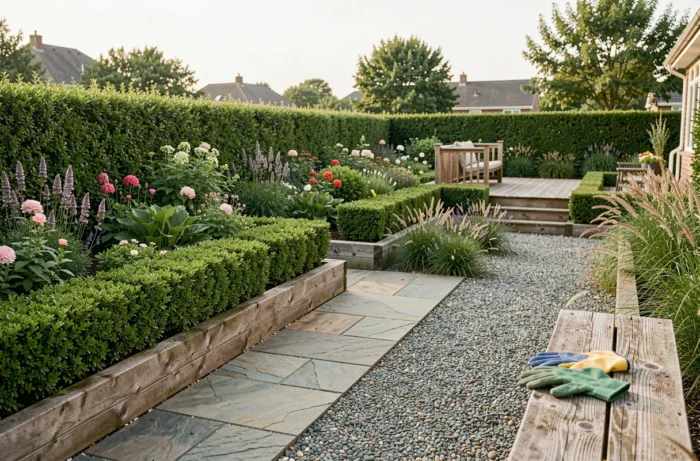
Transforming a garden is not just about accumulating furniture and plants. The result depends on precise technical choices: soil type, exposure, water management, materials compatible with the local climate. Here are ten concrete interventions that truly modify the structure and use of an outdoor space.
1. Install a buried drip irrigation system instead of surface watering
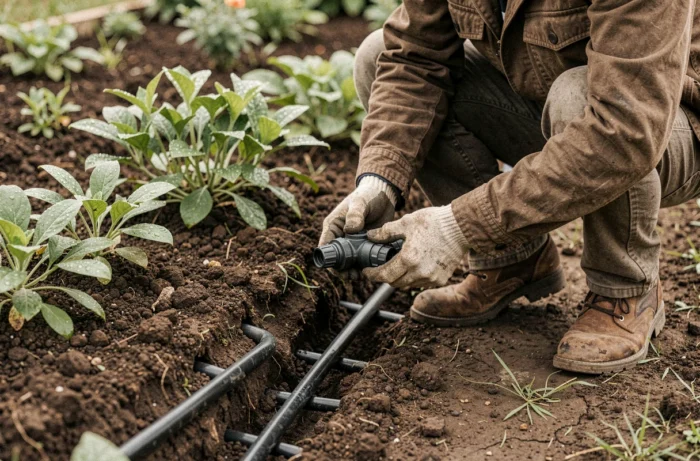
Surface watering wastes a significant amount of water through evaporation. Buried drip irrigation delivers water directly to the root zone, reducing consumption and limiting the growth of surface weeds.
We recommend pairing this system with a timer and organic mulch at least five centimeters thick. Mulching slows evaporation and regulates soil temperature. During periods of prefectural restrictions, targeted watering at the base often remains the only tolerated method, even with a recovery tank.
Plan for additional resources to design the layout on Passion Jardin, particularly regarding the sizing of irrigation circuits according to the area to be covered.
2. Create levels with dry stone walls
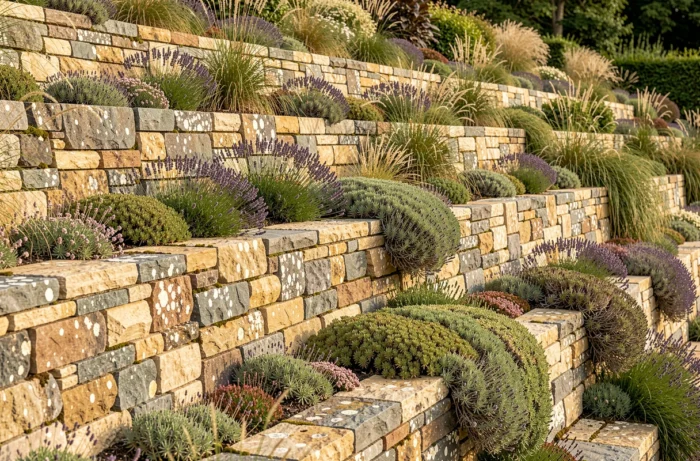
A flat terrain appears monotonous. Dry stone walls a few tens of centimeters high are enough to create visual terraces that structure the space and offer different microclimates from one level to another.
Dry stone, built without mortar, naturally drains water and shelters beneficial wildlife (lizards, pollinating insects). On clay soil, this drainage prevents winter stagnation that destroys roots. The cost is limited to transportation if you collect local stone.
3. Lay a wooden deck on joists for a removable terrace
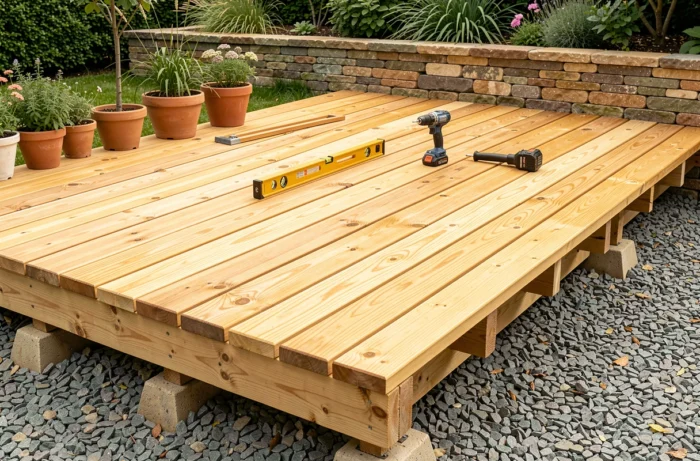
A concrete poured terrace is permanent and waterproofs the soil. A deck on joists, laid on adjustable pedestals, remains removable and allows water to infiltrate between the boards.
Prefer class 4 wood species (black locust, chestnut) or co-extruded composite to limit maintenance. Black locust is the only European species that is naturally class 4 without treatment. Aluminum joists eliminate the risk of rotting the support but increase the budget.
4. Plant a mixed wild hedge instead of thuja
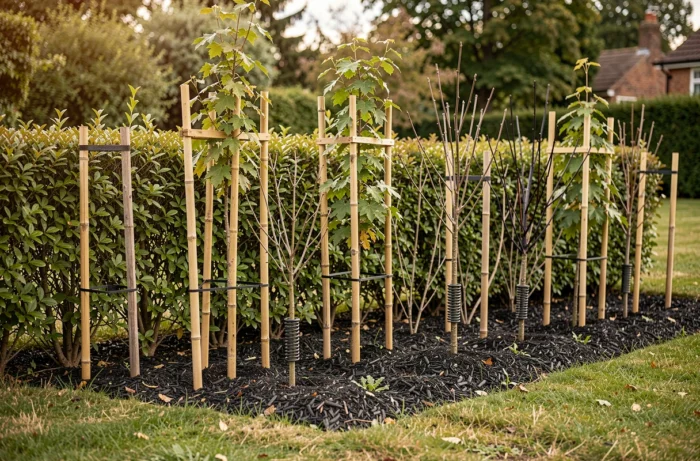
Thuja forms a dense screen, but it acidifies the soil, consumes a lot of water, and offers no food resources for wildlife. A mixed wild hedge (dogwood, hazelnut, viburnum, privet, sloe) provides a gradual privacy screen while feeding birds and pollinators.
Plant in a staggered pattern in two rows spaced fifty centimeters apart. The density compensates for the slower growth in the first few years. Allow three seasons for satisfactory coverage.
5. Collect rainwater with an above-ground tank compliant with 2024 regulations
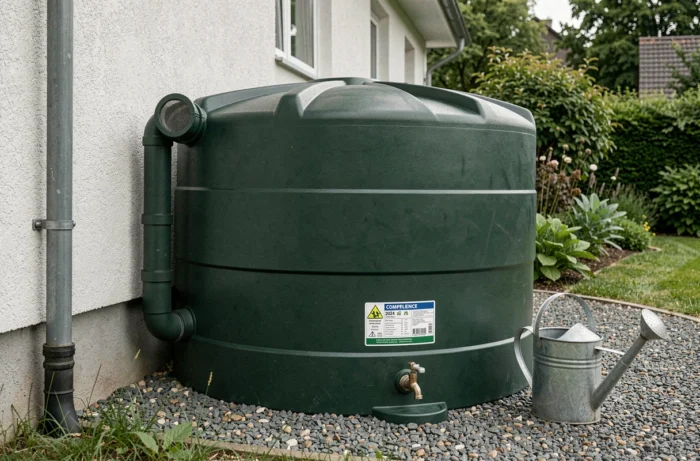
The decree of July 12, 2024, replaced the previous framework from 2008 and classifies rainwater as non-potable. For outdoor use (watering, cleaning surfaces, feeding a pond), no declaration at the town hall is required as long as the installation remains disconnected from the indoor network.
However, a connection to toilets or the washing machine requires a separate network, “non-potable water” signage, and a declaration at the town hall. Local authorities are increasing inspections: in Orée-d’Anjou, a verification campaign for wells, boreholes, and collectors was launched in 2025.
Note: prefectural drought orders may limit watering even with stored water. Pairing the tank with a drip system remains the most resilient strategy.
6. Design a pathway with stepping stones on a gravel bed
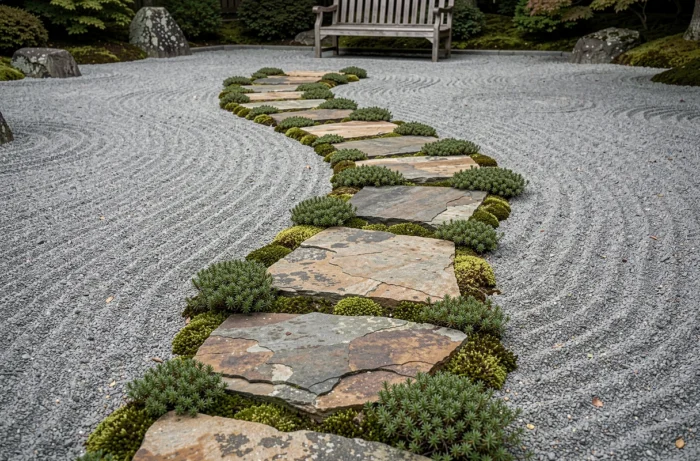
Stepping stones channel foot traffic without waterproofing the soil. Laid on a draining gravel bed, they prevent mud in winter and support daily passage without special maintenance.
The spacing between stones should correspond to the natural stride, about sixty centimeters from center to center. Choose a sufficient thickness of stone to withstand frost. Reconstituted stone slabs crack faster than natural stone (slate, granite) in regions subject to frequent freeze-thaw cycles.
7. Install low-voltage lighting along the flower beds
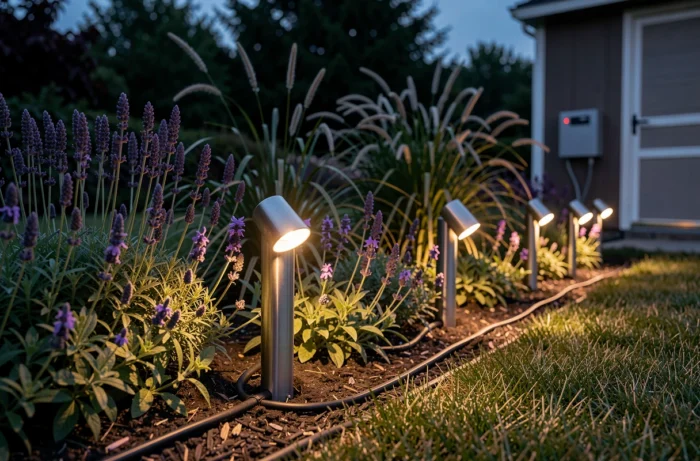
A 12 V low-voltage lighting system does not require a standard trench or electrician intervention if the transformer is installed indoors. The stake lights can be moved with the seasons to follow the blooms.
Direct the light towards the foliage, not the ground. Low-angle lighting from below creates volume and highlights plant textures. Zenithal lighting flattens the reliefs and attracts more nocturnal insects.
8. Build raised vegetable beds with untreated boards
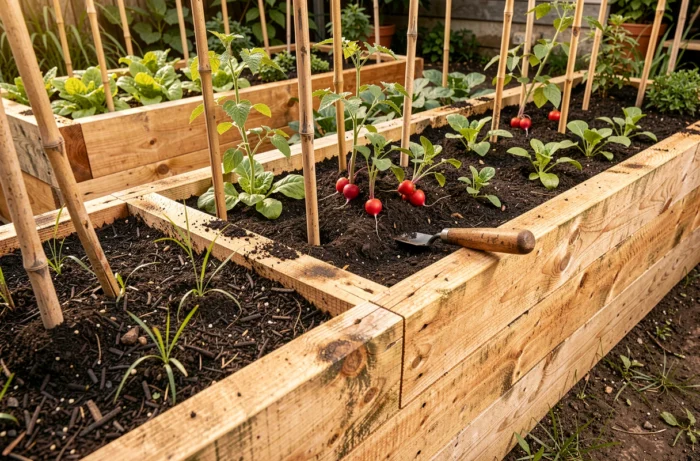
Raised beds allow cultivation on poor soil (fill, compact clay, slabs) by providing a controlled substrate. The working height reduces back strain and limits slug access.
Use untreated Douglas or larch boards, with a minimum thickness of twenty-seven millimeters to withstand the pressure of moist substrate. A bed wider than one hundred twenty centimeters becomes inaccessible from one side, complicating harvesting and weeding.
9. Plant persistent ground covers to eliminate weeding
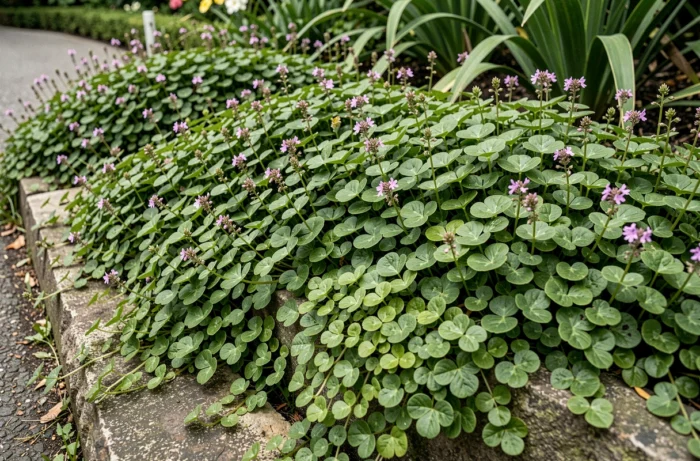
Manual or chemical weeding is the most time-consuming maintenance task in a garden. Persistent ground covers (pachysandra, vinca minor, hedera helix for shade, thymus serpyllum or sedum for full sun) form a dense carpet that smothers weeds in two seasons.
Plant six to nine plugs per square meter for quick coverage. Mulch between plants in the first year. Once established, these plants require no mowing or regular watering in a temperate climate.
10. Integrate Corten steel borders to delineate areas
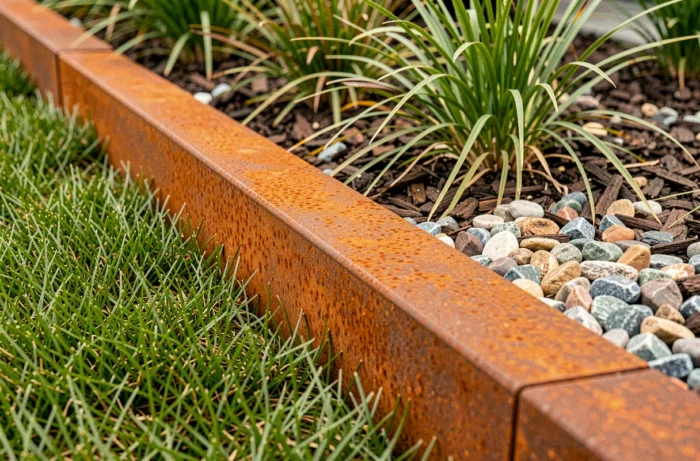
Corten steel develops a stable rust patina that protects it from deep corrosion. As a border, it clearly separates lawn, flower beds, and paths with a fine, contemporary line.
The strips are driven directly into the soil and can be bent to follow curves. Ensure that the supplier offers Corten A or Corten B, and not ordinary painted steel that mimics rust, which degrades in a few seasons. Wear gloves during installation: the edges are sharp and the patina stains textiles irreversibly.
Each of these interventions modifies the garden’s structure in the long term. The most cost-effective choice is to start with the water network and soil before investing in furniture or decoration, which will never correct a drainage or exposure problem.